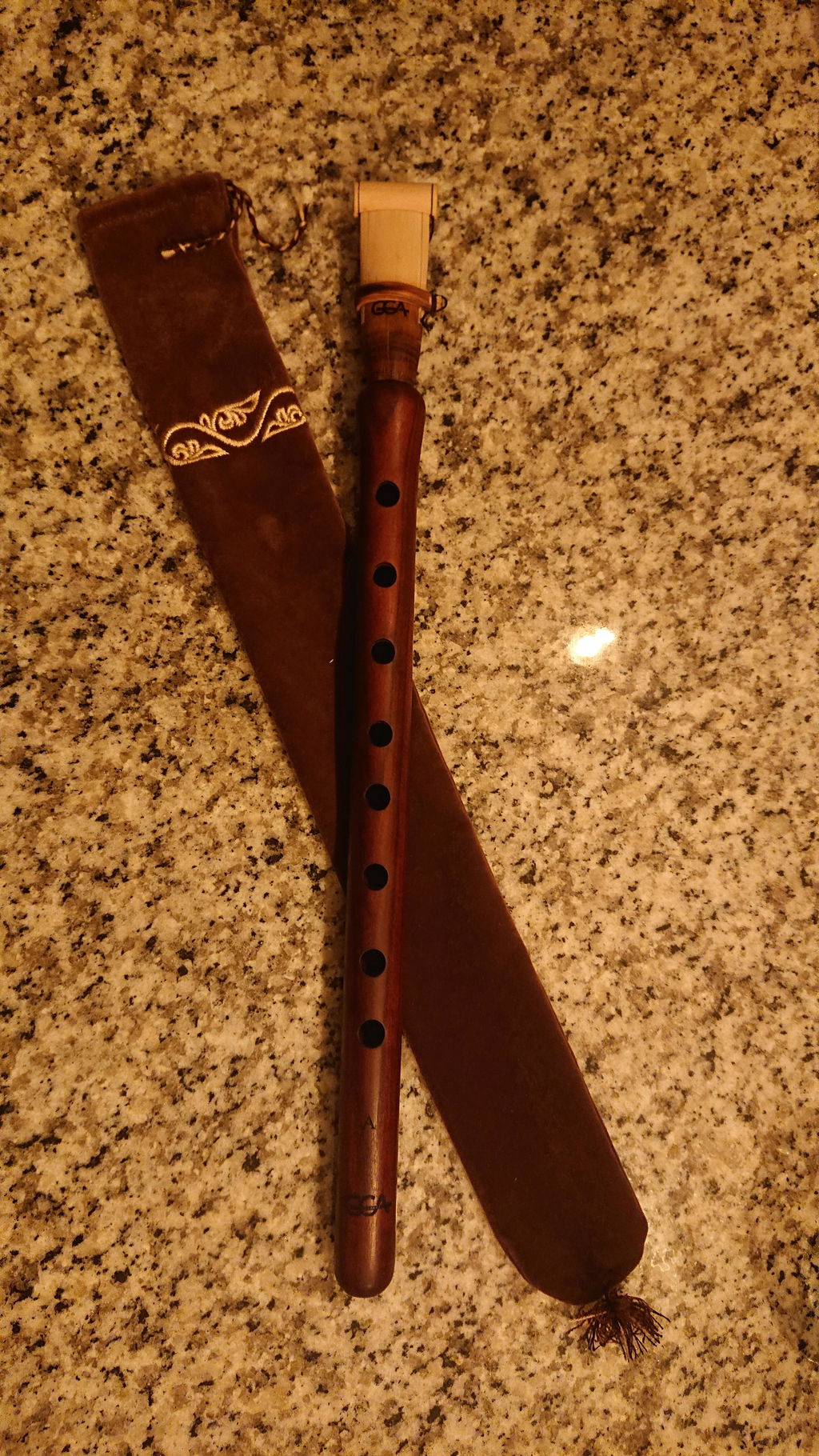
Duduk Reed Case: My Ten-Year Journey to a Proper Reed Storage Solution
Duduk reeds are interesting animals — and finding the right duduk reed case to store them is a challenge every player eventually faces. Not only are they the most capricious beings in the world, behaving however they wish (usually in the worst possible way, right when we need them at a gig) — they are also irregularly shaped like nothing else in the world. For the day-to-day life of a duduk player, the shape might not be a concern at all, because you use them to play, not to tangle with the engineering side of them. But bear with me, I'll get to that side of the story a bit later.
Ten years of storing duduk reeds badly
Throughout the ten years of my career as a duduk player, I've stored my reeds in all kinds of ways, and it has always been a challenge. I am a highly "geometric" person. I like things square, round, regular-shaped — and I like to keep things organized. I like my desk arranged in strict order (not that I always succeed at it), and I hate when my son sneaks in to play Roblox while I'm away from my desk, because when I come back, the organization of my desk is off. The same struggle extends to my duduks and my duduk reeds - I like to keep them organized. But that's not been an easy task for almost a decade. Let me tell you why.
The 2,000-year-old method of duduk reed storage
My first duduk and the reed didn't have any storage at all. They just sat on top of my piano, collecting dust. I accidentally found a good looking plastic box, once my reed count exceeded three. And that's probably when the first spark of an idea appeared: okay — how do professional duduk players store their reeds? After a bit of research and asking around, I figured out that almost everyone stores them in some sort of wooden or plastic box, ventured either from their kitchen or from the nearby dollar store. That was a surprising discovery — but at that point, just a discovery, because I had one duduk and a couple of reeds.

Then at some point I received a present: a duduk case with slots for two reeds. This was great. I could fit my A duduk and two favorite reeds and head out to play somewhere. But it stopped being comfortable the moment I needed to add a second instrument or needed more that a couple of reeds. The duduks were easy — I could toss them in my backpack. For the reeds, I returned to the old, proven, 2,000-year-old method: the plastic box (see the picture above).
And here's why it didn't let my geometric personality sleep at night. I would arrange the reeds beautifully in my plastic box, put it in my backpack, get to the gig, open it — and find what looked like the aftermath of a wild reed party. Reeds lying on top of each other, reed caps scattered left and right, tops and bottoms all mixed up. Frustrating. So I started thinking seriously about reed cases. And so the stressful journey began.
An engineer's nightmare: why duduk reed storage is so hard
Remember the engineering side I promised to tell you about? Here it is.
Through my research I found, if a thing has a regular shape, it's much easier to find a packaging solution for it. Square, round, conical — easy. Enter the duduk reed: you have the most unusual shape one could invent. Take a close look at one and see if you can find a single word to describe it. I bet you can't. The main body is close to a squished cone (or an irregularly puffed trapezoid), cut at the top and bottom — that part is easy. But then add the pitch regulator and the reed cap, and you get a shape so unique that if you showed it on Jeopardy!, they'd break their necks trying to figure out what it is.

Don't get me wrong — there are very interesting reed storage solutions emerging out there, and to be honest, I've been using them to this day. But to be frank, I was never fully satisfied with them. The bulkiness, the appearance, the materials, the closure mechanism — none of it was quite right for me. So I started sketching, thinking, and hiring designers to work with me on an ideal solution for storing reeds. Over the years I explored many concepts and worked with many designers. We produced concepts and manufactured prototypes, but nothing stuck with me as the overall ideal solution.
So here's what we did: a duduk reed case designed around real reeds
At some point, however, I think I found a solution — one that took on a life of its own, and one we're happy to finally present to other duduk players out there. I am not fully satisfied with it, and it's not a perfect solution, but it's the first one we've ever manufactured, so your feedback is ultimately important for us to keep improving it. But here, in a nutshell, is the thinking behind these cases.

As you know, reeds — even ones made for the same A duduk — come in slightly variable shapes, heights, and widths. One reed can sit slightly taller than another; one pitch regulator can protrude a bit more. There is an excellent reed case made by Vamelo that features trapezoid slots for the reeds, but my struggle with it was that my two best-playing reeds were slightly longer than the rest, and I couldn't fit them in the case. Eventually I had to keep them separately — in a beautiful plastic box from Muji.
So, long story short: we started to measure. At Dudukhouse, as you might know, we grade every reed we sell. They come to us from different makers, in all their slightly different shapes and sizes, and over the last five years I've personally graded thousands of them. So we started to measure while grading to know exactly how much duduk reeds actually vary — and we designed our storage slots around that. Each case fits any Armenian duduk reed currently available on the market, including those slightly longer ones that never fit anywhere else. And the case itself is lightweight, good looking and fashionable enough to show off.

The 3-reed and 5-reed cases also feature a fully removable tray. I designed it this way so it's also usable during gigs: instead of fishing the right reed out of a plastic box, you now have an organized way to perform. Simply set the case next to you during the gig and pull the tray halfway forward — the tray stays secure, your reeds stay beautifully organized, and the one you want is easy to reach. And the lid closes with a magnetic snap, so you can shut it with one hand.
3-reed vs 5-reed duduk reed case: which one is right for you?
If you typically perform with one or two duduks and carry a small selection of reeds, the 3-reed case is the perfect compact companion. If you're a more active performer who likes to have options — different reeds for different keys or conditions — the 5-reed case gives you that flexibility without adding bulk.
That's it for the reed cases. They're shop the Dudukhouse duduk reed case — I hope you'll get to try them. And if you do, please share your feedback so we can keep making them better. After ten years of plastic boxes, your reeds deserve it.