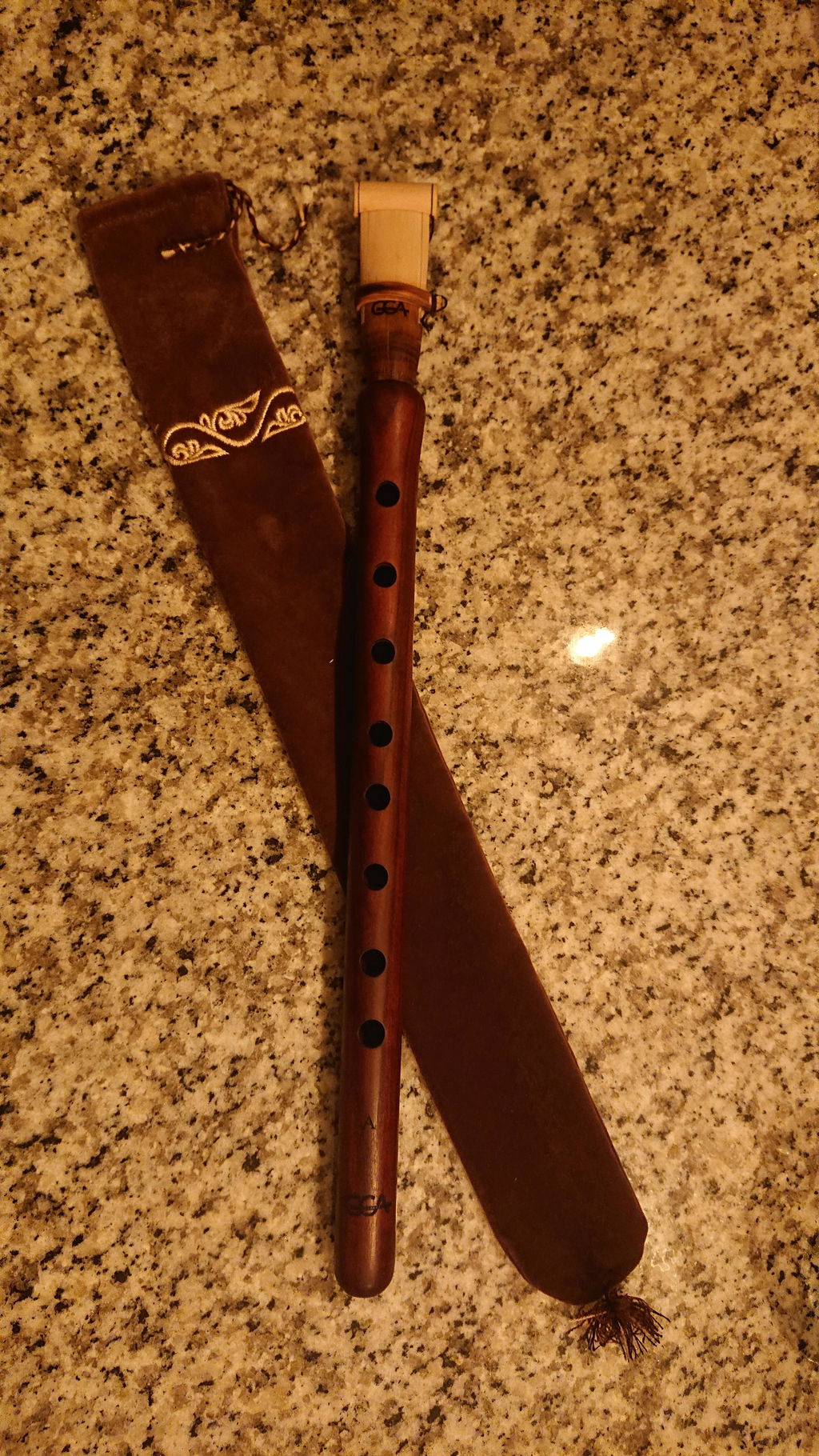
The Duduk in Film Scores: From Gladiator to Modern Cinema
Introduction
The haunting, soulful voice of the duduk has become one of the most recognisable sounds in modern film scoring. From sweeping historical epics to quiet, intimate character studies, its ability to reach directly into the emotional core of a scene has made it a favourite of composers around the world. This is the story of how an ancient Armenian folk instrument found its way to Hollywood — and why it has never left.
The Gladiator Effect: Duduk Goes Hollywood
The duduk's breakthrough moment in Western cinema came with Ridley Scott's
The result was transformative. The duduk's mournful, human-like voice proved to be the perfect vessel for what the film demanded — loss and longing, the weight of ancient civilisations, spiritual depth, and a vulnerability that no other instrument could quite reach. It spoke to something timeless in the human experience, and audiences felt it immediately.
Gladiator introduced the duduk to millions of listeners around the world, and in doing so, established it as the defining voice of epic, emotionally charged film scoring.
Listen to the Gladiator soundtrack featuring duduk →
Why Composers Love the Duduk
The duduk's tone is often described as the closest instrumental sound to the human voice. This quality makes it uniquely effective for conveying grief and loss or expressing longing and nostalgia — just as Maximus experienced throughout his journey. For this reason, composers often reach for the duduk to create intimate, personal moments and evoke spiritual, sometimes even transcendent themes.
What makes it even more useful is its cultural ambiguity. While deeply Armenian in origin, the duduk's sound does not immediately signal a specific culture to Western audiences. This allows composers to deploy it across ancient Roman, Greek, and Biblical settings, across Middle Eastern landscapes, and across any story that calls for a sense of timelessness or mythic weight — without the sound feeling out of place.
And in an orchestra full of familiar Western instruments, the duduk simply stands apart. Its timbre is instantly recognisable, it cuts through dense orchestration without effort, and it leaves a melodic impression that lingers long after the scene has ended.
Iconic Film Scores Featuring Duduk
The duduk's cinematic journey began in earnest with Peter Gabriel's score for
In the years that followed, the duduk became a staple of the historical epic. James Horner used it in
Beyond the ancient world, composers discovered the duduk's versatility. Harry Gregson-Williams brought it into the fantasy realm with
Master Duduk Players in Film
No name is more synonymous with the duduk in cinema than
Venezuelan multi-instrumentalist Pedro Eustache has performed duduk on countless Hollywood scores, collaborating with Hans Zimmer, James Horner, and many others. French-Armenian player Levon Minassian has brought the instrument to numerous European and American productions, carrying the tradition forward with equal artistry.
Choosing the Right Duduk for Film Scoring
For composers looking to incorporate the duduk into their work, the first and most practical question is whether the instrument can actually play in the key of your score. The duduk is a diatonic instrument, and not every key is equally accessible on every duduk. To make this easier, we built a simple tool that allows composers to enter the key of their score and instantly see which duduk keys are best suited to play in that scale — ranked from easiest to hardest. You can find it here:
If you plan to record live, the next consideration is the player. Every duduk player has their own sound — their own timbre, their own phrasing, their own emotional signature. Before committing to a session, take the time to listen to a few players and find the one whose voice resonates with the feeling of your piece. That choice alone can make the difference between a good score and an unforgettable one.
One more thing worth understanding: different duduk keys produce fundamentally different timbres, and that choice can drastically affect the final outcome of your score. The duduks in C and D — the piccolo end of the family — sit at the highest possible pitches and, unless you are working with a top-tier professional player, it is virtually impossible to achieve the haunting, soulful quality most composers are after on these instruments. The opposite is equally true: the duduk in F offers the deepest, most resonant sound in the entire family, but it comes with real technical demands that not every player can meet. Knowing these limitations before you write — or before you book a session — will save you considerable time and disappointment.
Finally, if you want to go deeper,
Compare duduk sounds across all keys →
Common Film Scoring Applications
The duduk's most powerful role is as a character theme — particularly for tragic heroes, displaced or searching figures, and characters connected to ancient or spiritual worlds. Its memorable voice makes it easy for audiences to associate a melody with a person, and that association deepens with every return.
As an emotional underscore, a subtle duduk line can carry grief, reflection, longing, or quiet determination beneath dialogue without ever overwhelming it. It supports rather than competes, which is a rare quality.
For establishing setting, few instruments work as efficiently. A single phrase of duduk immediately places the listener in an ancient civilisation, a Middle Eastern landscape, or a timeless mythic space. And for pure atmosphere — long, sustained tones that create mystery, tension, or meditative stillness — the duduk has no equal.
Learning Duduk for Film Scoring
If you are a composer interested in incorporating live duduk into your scores, you have two paths. For major projects, hiring an experienced player who understands recording workflow, improvisation, and the demands of film sessions is the most reliable route. But many composers choose to learn the instrument themselves — not necessarily to reach a performance level, but to sketch ideas, understand what the instrument can and cannot do, and communicate more clearly with the players they hire.
Getting started is more accessible than most people expect. A beginner-friendly duduk in A or G, a set of quality reeds, and a willingness to focus on tone and breath rather than complex melody is all you need.
Read our beginner's buying guide →
The Future of Duduk in Film
The duduk's presence in film scoring is still growing. It has moved well beyond historical epics into contemporary drama, thriller, and even horror — anywhere a composer needs a sound that feels ancient, human, and emotionally unguarded. Hybrid scores blending duduk with electronic elements are becoming increasingly common, and prestige television has embraced it as a marker of emotional seriousness. As more films explore Armenian culture and history directly, the instrument is also finding a new kind of authenticity on screen — no longer just a signifier of the ancient world, but a voice with a specific, living heritage behind it.
Resources for Film Composers
We have built a small but practical set of tools specifically to help composers work with the duduk more effectively.
-
Duduk Finder — Enter the key of your score and instantly see which duduk keys are best suited to perform in that scale, ranked from easiest to hardest. The fastest way to answer the question: which duduk do I need? -
Duduk Scale Explorer — Discover which musical scales are playable on each duduk, organized by performance difficulty. Useful for understanding the full harmonic range available to you before you write. -
Duduk Transposition Chart — Written knowledge on duduk transposition in English is scarce. This free PDF guide fills that gap, covering written tone, diatonic fingering, and transpositions to concert pitch for every key in the duduk family — from F Bass to D. An essential reference for any composer writing for the instrument. -
Duduk Essentials: A Complete Beginner's Guide — Written by Sar Kamler, this book includes a dedicated chapter for composers with practical advice on how to write for the duduk, alongside a thorough grounding in how the instrument works, how it plays, and all its intricacies.
Common Questions
Q: Is the duduk difficult to learn for film scoring purposes?
A: Basic melodies can be learned relatively quickly (weeks to months), but mastering expression and technique takes years. Many composers learn enough to sketch ideas and hire professionals for final recordings.
Q: Can I use sample libraries instead of live duduk?
A: Sample libraries exist but can't fully capture the duduk's expressive nuances. For major projects, live recording is strongly recommended.
Q: What key duduk did they use in Gladiator?
A: Primarily duduk in A, performed by Djivan Gasparyan.
Q: How much does it cost to hire a professional duduk player for a film score?
A: Rates vary widely based on the player's experience, project budget, and recording requirements. Expect $500-2000+ for a professional session.
Final Thoughts
The duduk has earned its place in the film composer's palette through something that cannot be manufactured: genuine emotional truth. Whether you are a composer looking to incorporate it into your scores, or a musician drawn to its cinematic possibilities, this instrument rewards curiosity. Its journey from Armenian shepherds to Hollywood soundstages is a testament to the universal power of music to cross every boundary and reach directly into the human heart.