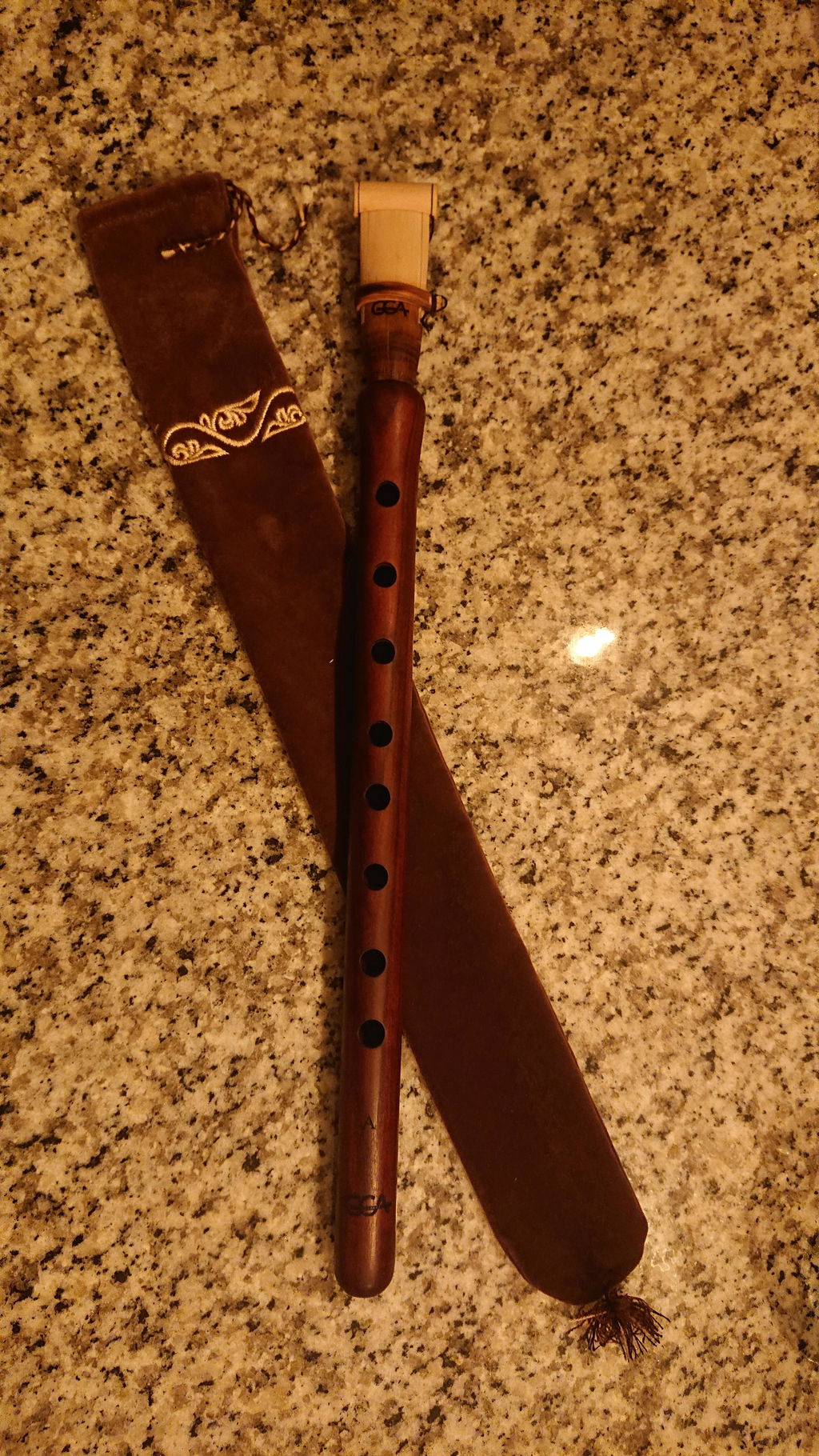
Armenian Duduk History: Ancient Instrument, Timeless Voice
There is a sound that, once heard, is impossible to forget. Low, breathy, and aching with feeling — it seems to rise not from an instrument but from somewhere deep inside a living thing. That sound is the duduk, and it has been the voice of the Armenian people for thousands of years. UNESCO called it a Masterpiece of the Intangible Heritage of Humanity. Armenians simply call it the sound of their soul.
This is the story of how a simple wooden pipe carved from apricot wood became one of the most emotionally powerful instruments in human history — surviving empires, wars, and centuries of change to move hearts in concert halls, film scores, and village squares around the world.

At a Glance
- Age: 1,500–3,000+ years old
- Material: Aged apricot wood, seasoned 3–10 years
- Armenian name: Tsiranapogh (ծիրանափող) — "apricot pipe"
- UNESCO Heritage status: Inscribed 2005 & 2008
- Used in: Weddings, funerals, ceremonies, film scores, concert halls
Ancient Origins
The exact birth of the duduk is lost to time, the way most truly ancient things are. Scholars believe it has been played for somewhere between 1,500 and 3,000 years, with some evidence pointing even further back — to the civilizations of ancient Mesopotamia and Urartu, in the highlands that would become Armenia. Ancient manuscripts mention it. Medieval Armenian art depicts it. Oral traditions trace it to pre-Christian times. The instrument wasn't invented so much as it was remembered — passed from one set of hands to another across an unbroken chain of generations.
Its name carries a small mystery of its own. "Duduk" may derive from the Armenian word tut, meaning mulberry — even though the instrument is actually made from apricot wood. In Armenian, it's more precisely called tsiranapogh (ծիրանափող), which translates beautifully as "apricot pipe." In some regions it goes by the name balaban. But to the world, it is the duduk — and that name has traveled far.

The Voice of a People
To understand why the duduk matters, you have to understand what it was asked to do. It didn't live in concert halls or royal courts alone — it was present at the most human moments of Armenian life. At weddings, it played the melodies that welcomed a new union. At funerals, its mournful tones gave shape to grief that words couldn't hold. It accompanied shepherds in the mountains, storytellers performing ancient epic poems, communities gathered for festivals. It was the music of joy, but also of loss, of longing, of a people trying to remember who they were.
That emotional range isn't accidental. Armenia's history has been one of extraordinary cultural achievement alongside profound tragedy — a nation that has survived foreign rule, forced displacement, and one of the 20th century's great genocides. The duduk didn't just reflect that experience. In many ways, it held it together. When political expression became dangerous, music became a way to carry identity forward without saying a word.
"When political expression became dangerous, music became a way to carry identity forward without saying a word."
UNESCO Recognition
In 2005, the world formally acknowledged what Armenians had always known. UNESCO inscribed "Duduk and its Music" on its Representative List of the Intangible Cultural Heritage of Humanity — recognizing not only the instrument's unique cultural significance but the urgent need to protect it. The recognition raised global awareness, supported preservation efforts in Armenia, and encouraged a new generation to pick up the instrument. It also affirmed something important: this isn't just Armenian heritage. It belongs to all of us.
UNESCO — Intangible Cultural Heritage
"Duduk and its Music" was proclaimed a Masterpiece of Intangible Heritage in 2005 and formally inscribed in 2008 — one of only a handful of musical traditions to receive this distinction.
Surviving History
Through the medieval period, the duduk was played at royal courts and in village squares alike, carried by gusans — the traveling minstrels who preserved Armenian culture through music and poetry in an age before written records could reliably do so. When Armenia came under Ottoman and Persian rule, the duduk quietly continued its work of cultural survival. Music became a form of resistance that no conqueror could quite suppress.
The Soviet era brought a complicated chapter. On one hand, duduk education was formalized, professional ensembles were established, and repertoire was documented and recorded in ways that had never been possible before. On the other hand, the pressure toward standardization flattened some of the wild regional variations that had made the tradition so alive. When Armenia gained independence in 1991, it came with a kind of musical renaissance — a return to traditional styles, a wave of international recognition, and a growing appetite among young players to fuse the duduk's ancient voice with contemporary genres.
The Masters Who Carried the Flame
No story of the duduk is complete without Djivan Gasparyan (1928–2021), the towering figure who introduced the instrument to the world. Born in Soviet Armenia, Gasparyan spent decades perfecting a sound of heartbreaking beauty, and eventually took it everywhere — collaborating with Peter Gabriel, Hans Zimmer, and Sting, performing on the soundtrack to Gladiator, touring stages that had never heard the duduk before. He didn't just play the instrument. He made millions of people fall in love with it.

He wasn't alone. Gevorg Dabaghyan became a virtuoso performer and beloved teacher. Levon Minassian, the French-Armenian master, brought the duduk into the world of cinema with quiet authority. Vache Hovsepyan kept the traditional style alive with fierce dedication, while Mkrtich Malhasyan pushed into new creative territory. Each of them, in their own way, made sure the flame didn't go out.
Learn more about legendary duduk players →
The Craft Behind the Sound
The duduk's voice begins long before anyone plays a note — it begins with the wood. Only aged apricot wood will do, seasoned for three to ten years until it reaches the density and stability needed to hold its shape and sing. A master craftsman then spends forty to sixty hours on a single instrument: carving the body, boring the interior, drilling the finger holes with precision that has to be felt as much as measured, hand-tuning the instrument and testing it with multiple reeds before any final adjustments are made. The best makers sign their work, and players know those names the way musicians know the names of great violin luthiers.
Why apricot wood? Because nothing else sounds quite the same. The dense grain produces resonance, the natural oils enhance tone, and the wood's stability prevents the cracking that comes with age and changing climates. There's also something fitting about it — the apricot tree is deeply woven into Armenian identity, and the instrument carved from it carries that rootedness in every note.

Learn about duduk master craftsmen →
The Duduk and the Diaspora
For Armenians living far from their homeland — scattered across continents by history and circumstance — the duduk has served as something more than music. It is a cord connecting them to a place many have never seen. It's played at community gatherings, taught to children who grow up speaking English or French or Arabic but carry Armenian surnames. It sounds at church services in Los Angeles and Paris and Beirut. In this way, the duduk has done what instruments rarely do: it has kept a scattered people whole.
At the same time, it has also transcended its origins. Non-Armenian musicians around the world have fallen under its spell, incorporating it into jazz, ambient music, and world fusion. Film composers reach for it when they need something that speaks directly to the emotional core — something that sounds, as one director once put it, like it comes from before language. Explore the duduk in film music →
The Duduk Today
In Armenia, the duduk is taught in conservatories and performed in concert halls, while also showing up at weddings and family celebrations exactly as it always has. The instrument lives in both worlds — ancient and contemporary — without belonging entirely to either. Around the world, its presence keeps growing: in film scores and meditation music, in university ethnomusicology programs, in the hands of players who first heard it in a movie and followed that sound back to its source.
The challenges are real. There are fewer master craftsmen than there once were, and mass-produced imitations threaten to replace instruments that actually deserve the name. Traditional playing styles that took generations to develop can disappear in a single generation if no one makes the effort to learn them.
But the opportunities are real too. Global curiosity about the duduk has never been greater. Digital resources are making it easier to find teachers and recordings. And something about the sound itself seems to cut through the noise of the modern world and reach people in a way that's hard to explain but impossible to deny.

Where to Begin
If you want to hear what the duduk can do, start with Djivan Gasparyan's album I Will Not Be Sad in This World — a recording that still stops people in their tracks decades after it was made. From there, explore traditional Armenian folk songs and ceremonial music, then follow the thread into film soundtracks, world music collaborations, and the work of contemporary Armenian composers who are finding new ways to speak in an ancient voice.
If you want to learn, seek out a teacher who knows the tradition — the instrument rewards study, and there is no substitute for understanding the cultural context that gives the music its meaning. And if you decide to buy a duduk, choose one made by an Armenian craftsman. Names like Vamelo, Sevada, MKS, and GGA represent a lineage of skill and care that mass production simply cannot replicate.
Ready to begin?
Explore our collection of authentic Armenian duduks
Every instrument in our collection is hand-crafted in Armenia by a named master. Real apricot wood. Real lineage. Ready to play.
Shop Authentic Duduks →A Living Link
When you hear the duduk — really hear it — something happens that's difficult to put into words. It sounds old in the way that mountains are old, in a way that seems to carry memory within it. And in a sense, it does. Every player who picks up the instrument steps into a line that runs back thousands of years, through shepherds and minstrels and masters and mourners, through a people who refused to let their voice go silent.
Whether you're Armenian and searching for something you can feel but can't quite name, or a music lover who stumbled across the sound and can't get it out of your head — the duduk has a way of drawing you in. That's not an accident. It has been doing exactly that for millennia.